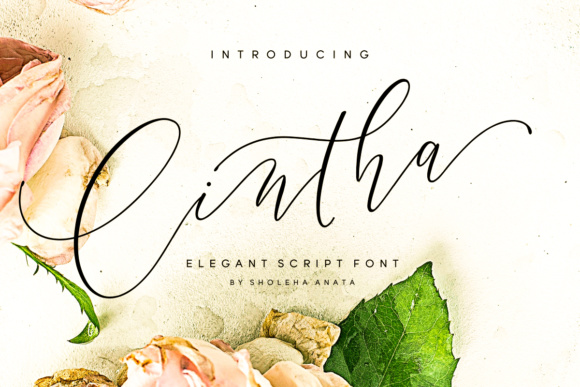
Cintha: The Modern Script Font for Elegant Branding
There’s a certain magic in a font that feels both personal and polished. Cintha captures that balance perfectly. It’s a modern calligraphy script with a sophisticated, flowing character that evokes the elegance of a beautifully penned wedding invitation, yet it’s built for the demands of contemporary design. If you’ve been searching for a typeface that adds a touch of handwritten warmth without sacrificing clarity or professionalism, Cintha is a compelling choice worth exploring.
The Anatomy of Cintha: More Than Just a Pretty Script
At first glance, Cintha presents itself as a graceful, connected script. Its letterforms are crafted with smooth, flowing strokes that mimic the natural rhythm of a skilled calligrapher’s hand. This isn’t a rigid, mechanical font; it has a personality. The moderate contrast between thick and thin strokes gives it depth, while the soft, rounded terminals prevent it from feeling overly sharp or formal. The result is a typeface that feels approachable and human, yet undeniably elegant.
What makes Cintha stand out in the crowded world of script fonts is its versatility. It’s not trying to be a rustic, hand-scrawled note or an overly ornate Victorian relic. Instead, it occupies a sweet spot as a premium font with a modern calligraphy sensibility. The connections between letters are thoughtfully designed to maintain legibility, even at smaller sizes. This attention to detail means you can use it for more than just a logo or headline—it can function effectively in longer phrases and short blocks of text where many other script fonts would fail.
Where Cintha Truly Shines: Practical Applications
The true test of any creative font is how it performs in real-world projects. Cintha’s elegant personality makes it a natural fit for specific applications where you want to convey sophistication, care, and a personal touch.
- Brand Identity & Logo Design: For businesses in the wedding, beauty, lifestyle, or boutique service industries, Cintha can form the core of a brand identity. Imagine it on a logo for a wedding planner, a floral studio, or a high-end bakery. It immediately communicates an aesthetic of refined elegance and personal service. Paired with a clean sans serif font for body text, it creates a beautiful and functional hierarchy.
- Packaging & Product Labels: On shelf, packaging needs to tell a story quickly. Cintha excels on labels for artisanal goods, cosmetics, gourmet foods, or stationery. Its handwritten quality suggests craftsmanship and care, helping a product stand out as premium and thoughtfully made.
- Editorial & Publishing Design: In magazines, lookbooks, or book covers, Cintha can be used for pull quotes, chapter titles, or author names. It adds a layer of visual interest and breaks up the monotony of standard serif and sans serif layouts, guiding the reader’s eye to key elements.
- Digital & Social Media Graphics: For Instagram stories, Pinterest pins, or website hero banners, Cintha delivers impact. Use it for a motivational quote graphic, a sale announcement, or a personal blog header. Its smooth texture renders beautifully on screen, adding personality to your digital presence without looking out of place.
- Personal & Craft Projects: This is where Cintha’s heart lies. For wedding invitations, greeting cards, thank you notes, or DIY craft projects, it provides the authentic, sophisticated handwritten look that many crafters and hobbyists seek, but with the precision of a professional design asset.
Designing with Cintha: Strategy and Considerations
Choosing a beautiful font is only half the battle. Using it effectively is what separates amateur work from professional design. Here’s how to approach Cintha with a strategic mindset.
1. Evaluating Fit and Readability
Before you commit, ask: does Cintha’s personality align with my project’s voice? Its elegant, flowing style is perfect for themes of romance, luxury, and personal care. It might be less suitable for a tech startup or a children’s toy brand that requires a more playful or geometric aesthetic.
Readability is paramount. Always test Cintha at the intended size and in the intended context. As a script font, it’s generally best suited for display purposes: headlines, logos, short phrases. For body text, always pair it with a highly legible serif font or sans serif font. A common and effective pairing is Cintha with a simple, geometric sans serif like Montserrat or Poppins. The contrast creates a clear visual hierarchy and ensures your message is communicated clearly.
2. Mastering Font Pairings and Hierarchy
The key to professional typography is contrast. Use Cintha for your primary headline or logo to draw attention. Then, choose a secondary font for subheadings and a tertiary font for body copy. For example:
- Headline: Cintha (for impact and personality)
- Subheading: A medium-weight sans serif (for clarity and structure)
- Body Text: A regular-weight sans serif or serif (for effortless reading)
This approach ensures your design is both beautiful and functional, enhancing audience engagement rather than hindering it.
3. Understanding the Font Package
A professional commercial font like Cintha often comes with more than just the basic letters. Review the included files. Does it offer stylistic alternates? Swashes? Ligatures? These features allow you to customize the look of specific letter combinations, adding even more unique flair to your designs. Check the licensing as well. For most commercial projects—client work, products for sale, marketing materials—you’ll need a commercial license. Ensure the license covers your intended use, whether it’s for print, digital, or both.
4. Leveraging Modern Typography Trends
Cintha fits well within current modern typography trends that favor authenticity and handcrafted details. It can be used as a standalone hero or integrated into more complex layouts. Try pairing it with a bold, condensed sans serif for a dynamic, contemporary contrast. Or, use it alongside a minimalist display font to let its elegance take center stage. The goal is to use it as a tool to reinforce your message, not just as decoration.
In a world saturated with generic fonts, Cintha offers a refined and authentic voice. It’s a tool for designers, entrepreneurs, and creators who understand that typography is more than just letters on a page—it’s a crucial component of storytelling, brand perception, and emotional connection. By applying it thoughtfully and strategically, you can elevate your projects from merely seen to truly remembered.